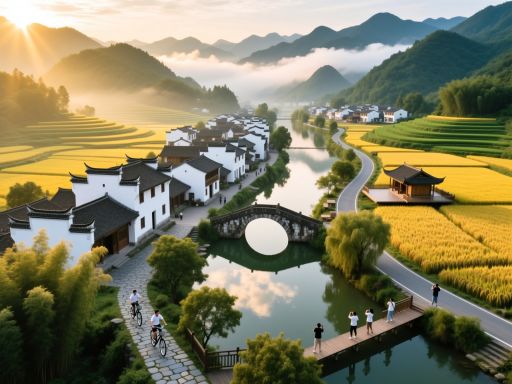
All-for-one tourism is a new concept and model of coordinated regional development that takes tourism as a leading industry and, through comprehensive and systematic optimization and upgrading of economic and social resources in a region—especially tourism resources, related industries, the ecological environment, public services, institutional mechanisms, policies and regulations, and civic quality—achieves organic integration of regional resources, integrated industrial development, and shared social contribution, using tourism to drive and promote coordinated economic and social development.
Counties, cities, districts, and townships are the key levels for implementing all-for-one tourism. Their core objectives are: to break the dual structure inside and outside scenic areas and realize the transformation from “sightseeing tourism” to “all-for-one tourism”; to promote deep integration of tourism with agriculture, culture, sports, health and wellness, and other industries; to improve the tourism public service system and enhance both visitor experience and residents’ quality of life; and to form an all-for-one tourism development pattern led by the government, operated by the market, and participated in by society.
The first step of a comprehensive all-for-one tourism solution is to carry out a systematic resource survey and assessment. Counties, cities, districts, and townships should organize professional teams to conduct a thorough inventory of resources within their jurisdictions, including natural ecology, history and culture, folk customs, distinctive industries, and rural landscapes, establish a tourism resource database, and identify core attractions and potential resources.
On the basis of the resource survey, an all-for-one tourism development plan should be prepared and aligned with territorial spatial planning, rural revitalization planning, transportation planning, and other plans. The top-level design should clearly define the following:
All-for-one tourism requires public services to shift from “scenic area support facilities” to “region-wide coverage.” Counties, cities, districts, and townships should focus on advancing the following:
Counties, cities, districts, and townships should base their efforts on local industrial foundations, promote two-way integration of “tourism+” and “+tourism,” and cultivate new business formats and new products.
Relying on distinctive agriculture, pastoral landscapes, and rural settlements, develop leisure agriculture, sightseeing picking, farming experiences, rural homestays, and other business formats, and promote the transformation of agricultural products into tourism commodities.
Tap local history, folk customs, intangible cultural heritage, and red culture resources; create experience products such as cultural exhibition halls, intangible cultural heritage workshops, live performances, and festival activities; and enhance the cultural connotation of tourism.
Combining resources such as mountains, waters, and forests, develop sports tourism projects including hiking, cycling, rafting, camping, and outdoor team-building to extend visitors’ length of stay.
Leveraging ecological advantages and traditional Chinese medicine resources, develop products such as forest health and wellness, hot spring therapy, and rural retirement living to meet the needs of the silver-haired market and sub-healthy populations.
All-for-one tourism requires a unified brand image and sustained market promotion. Counties, cities, districts, and townships should clarify their brand positioning, distill a catchy promotional slogan, and design a unified visual identity system.
All-for-one tourism is a systematic project that requires sound institutional mechanisms as support.
It is recommended that counties, cities, districts, and townships advance according to the rhythm of “lay the foundation in one year, see results in two years, and build a brand in three years”:
The key to implementing a comprehensive all-for-one tourism solution lies in adapting measures to local conditions, highlighting distinctive features, and sustaining operations. Counties, cities, districts, and townships should avoid blind imitation, base themselves on their own resources and market conditions, and follow a path of differentiated and quality-oriented development, truly achieving the comprehensive benefits of tourism benefiting the people, industry revitalizing the county, and an ecologically livable environment.
Previous:Smart Rural Cultural Tourism Development Solution
Next:No more
 Scan WeChat QR code
